Jesus the Way Truth Life Cross: A Designer's Review
As a professional embroidery designer and product reviewer, I approach every new digital asset with a critical eye. When evaluating religious graphics for commercial or personal use, the balance between spiritual reverence and technical stitchability is paramount. The Jesus the Way the Truth the Life Cross design presents a unique opportunity to create meaningful handmade products, but like any machine embroidery design, it requires careful consideration before the needle hits the fabric. This review breaks down my practical assessment of this graphic for real-world application in custom apparel, home decor, and faith-based merchandise.
First Impressions and Visual Weight
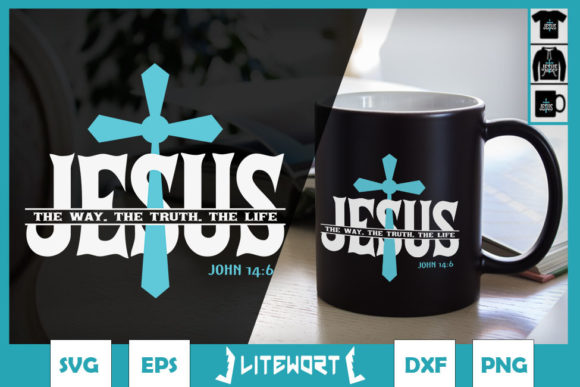
Upon opening the files, which include EPS, SVG, PNG, and DXF formats, the immediate impression is one of classic solemnity. The typography suggests a traditional serif or script hybrid that commands respect without feeling archaic. For an embroidery project, this visual weight is crucial. Graphics in the Crafts category often struggle when translated to thread because fine lines can get lost or heavy blocks can pucker fabric. This design appears to have enough structural integrity to support both satin stitch outlines and potential fill stitch areas, though the specific digitization parameters must be verified by the user since this is a digital file only.
The layout centers on the cross motif integrated with the scripture reference from John 14:6. This integration creates a cohesive focal point rather than disjointed text and iconography. For an Etsy seller or small shop owner, this cohesion translates directly to perceived value. Customers looking for personalized gifts or boutique branding want designs that look intentional and professionally composed. The mood is uplifting yet grounded, making it suitable for a wide demographic ranging from nursery decor to adult ministry apparel.
Real-World Application: Stitching a Custom Tote Bag
To truly evaluate this design, I mentally walked through a recent client request for a canvas tote bag intended as a church retreat gift. Canvas is a forgiving fabric texture, but it demands proper stabilizer usage to prevent distortion. In this scenario, the Jesus the Way the Truth the Life Cross serves as the primary branding element.
When planning this tote bag design, I considered how the lettering would interact with the weave of the canvas. If the font contains extremely thin serifs, they might require a running stitch reinforcement or a slight thickening during the digitizing verification process to ensure they don't disappear into the fabric grain. Conversely, if the cross features dense fill stitch areas, using a tear-away stabilizer alone might result in tunneling. A cut-away stabilizer would likely be necessary to maintain the shape of the cross over time, especially for a bag that will endure frequent washing and heavy use.
This real-life case highlights why checking stitch density is non-negotiable. While the provided vector files (EPS, SVG, DXF) are excellent for resizing and editing, the final embroidered patch or direct-to-garment application depends entirely on how those vectors are interpreted by your embroidery software. For a craft business producing these totes, testing on scrap fabric first is the only way to guarantee the "Truth" and "Life" text remains legible at smaller sizes.
Navigating Fabric Limitations and Hoop Sizes
Versatility is key for creative entrepreneurs, but not every fabric welcomes complex religious graphics. I advise caution when applying this design to stretchy knits like lightweight t-shirts or baby clothes without significant modification or testing. The combination of a structured cross and detailed text can create a stiff spot on a soft garment if the stitch count is too high. For baby embroidery or delicate holiday embroidery projects, you may need to simplify the design or utilize an applique design technique to reduce density while maintaining the visual impact.
Hoop size compatibility is another practical constraint. Before purchasing or stitching, confirm that the design dimensions fit within your machine’s maximum embroidery area. Resizing vector graphics is mathematically perfect, but resizing embroidery files can distort stitch angles and spacing. If you plan to use this for cap embroidery or curved surfaces, the flat nature of the provided graphics means you will likely need to re-digitize or warp the design to accommodate the curve of the hat. Flat text on a curved brim often looks distorted to the human eye, so professional adjustment is recommended for headwear.
Dark fabrics also present a challenge. If the design relies on intricate internal details within the cross, those nuances may vanish on navy or black material unless you employ a white underlay or adjust thread colors for higher contrast. Always test light and dark fabric backgrounds before committing to a production run for your shop.
Commercial Value and Customer Trust
For digital product sellers and apparel decorators, the quality of your finished product reflects directly on your brand. Using a well-composed graphic like Jesus the Way the Truth the Life Cross signals professionalism. However, because this listing specifies "digital files only," there is an inherent responsibility on the maker to ensure the final output meets customer expectations. High-quality printable mockups using the included PNG file can help set accurate expectations for buyers, but nothing replaces the trust built by showing photos of actual stitched samples.
In the competitive market of faith-based goods, clarity equals sales. Blurry stitches, puckered fabric, or illegible text due to poor stabilization will lead to returns and negative reviews. By treating this graphic as a professional design asset rather than just a clipart file, you elevate your entire product line. Whether you are creating wedding gifts, kitchen towels, or commercial embroidery for local ministries, the consistency of your execution validates the price point of your handmade product.
Essential Technical Checklist for Makers
Before adding this design to your next collection, run through this practical checklist to ensure success:
- Verify Licensing: Confirm whether the license allows for commercial use on finished products or if it is restricted to personal use. Never assume commercial rights for digital assets.
- Test Stitch Density: Load the file into your embroidery software to check for overly dense areas that could break needles or damage delicate fabrics.
- Stabilizer Selection: Match your stabilizer to the fabric weight. Use cut-away for knits and stretchy materials; tear-away may suffice for stable woven cottons.
- Thread Color Contrast: Ensure the chosen thread colors provide sufficient contrast against the base fabric, especially for the smaller text elements.
- Mockup Validation: Use the PNG file to create realistic digital previews, but always validate with a physical stitch-out before listing items for sale.
- Resize with Care: If scaling the design significantly up or down, inspect the stitch length and density settings to prevent gaps or bulletproof stiffness.
Final Thoughts for the Creative Entrepreneur
The Jesus the Way the Truth the Life Cross is a potent graphic asset for the faith-based crafting niche. Its inclusion of multiple file formats offers flexibility for both vinyl cutters and embroidery digitizers, making it a versatile addition to your design library. However, its success in a real project hinges entirely on your technical diligence. As experienced makers know, a beautiful screen image does not automatically equal a beautiful embroidered patch or sweatshirt embroidery.
Approach this design with the respect it deserves and the technical scrutiny your business requires. Test thoroughly, stabilize appropriately, and verify all licensing terms. When executed correctly, this design has the potential to become a staple in your catalog of personalized gifts and commercial embroidery offerings, resonating deeply with customers seeking meaningful, high-quality handmade goods. Remember that in our industry, excellence is found in the details of the stitch, not just the beauty of the vector.