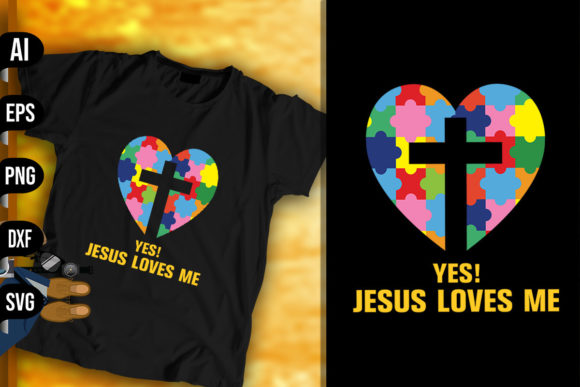
Yes, Jesus Loves Me Autism Awareness Graphics & Print Templates
As a digital publisher and blog designer constantly scouting for assets that bridge the gap between emotional resonance and professional presentation, my first impression of Yes, Jesus Loves Me - Autism Awareness was one of immediate editorial utility. In the niche of faith-based special needs parenting and neurodivergent advocacy, visual communication is often polarized; designs tend to be either overly clinical or excessively juvenile. This particular graphic design asset strikes a necessary balance, offering a gentle, respectful aesthetic that feels appropriate for both personal storytelling and educational content. The mood is undeniably warm and reassuring, yet it maintains enough structural clarity to function as a serious piece of web design rather than just a decorative clip art element.
For content creators managing websites in the faith, parenting, or disability support sectors, this asset signals safety and understanding to the reader before they even engage with the text. It avoids the chaotic visual noise that can sometimes overwhelm neurodivergent readers or their caregivers, instead providing a clean, modern design anchor. From a publishing workflow perspective, it reads as a versatile foundation for brand identity, capable of supporting everything from heartfelt blog posts to structured digital guides without losing its core message of compassion and inclusion.
Deploying Visual Assets Across Editorial and Social Workflows
In a real-world publishing environment, versatility is the metric by which I judge any printable design or graphic. When integrating Yes, Jesus Loves Me - Autism Awareness into a content strategy, I see immediate applications across multiple platforms. For bloggers, this asset serves as an exceptional featured image for articles discussing spiritual inclusion, sensory-friendly worship, or family devotionals. The composition allows for easy text overlay, making it functional as a Pinterest pin where clear typography and emotional imagery are required to drive click-throughs. Unlike generic stock photography, this specific illustration carries a narrative weight that aligns perfectly with affiliate marketing for Christian books, sensory toys, or homeschooling curriculums tailored for special needs families.
Beyond standard blog graphics, this asset shines when repurposed for lead magnets and digital products. Imagine using this visual as the cover art for a downloadable PDF guide titled "Faith and Neurodiversity" or as a header for a weekly newsletter focused on inclusive ministry. Because the product description highlights its print-ready nature for items like t-shirts, mugs, and tote bags, it also offers unique opportunities for small business branding. A publisher could create a cohesive visual ecosystem where the website header matches the merchandise available in an affiliated shop, creating a seamless brand experience. This consistency builds reader trust and reinforces the community aspect of the content, transforming a simple graphic into a cornerstone of a broader creative design strategy.
Enhancing Reader Trust Through Intentional Design Hierarchy
Visual hierarchy is not just about aesthetics; it is about guiding the reader’s emotional journey. Using Yes, Jesus Loves Me - Autism Awareness effectively can significantly improve content performance by establishing an immediate tone of empathy. In editorial design, we often talk about "stopping the scroll," but in this niche, we must also talk about "calming the scroll." This asset supports that goal by providing a familiar, comforting visual cue that validates the reader's experience. When used as a category thumbnail or a sidebar accent, it helps users navigate the site intuitively, signaling that they have found a safe space for relevant information.
Furthermore, high-quality, niche-specific graphics contribute to perceived authority. Generic visuals can make a blog feel like a content farm, whereas curated assets like this suggest that the publisher understands the specific intersection of faith and autism. This directly impacts metrics like time-on-page and return visits. When readers see that a site’s visual identity reflects their own values and experiences, they are more likely to engage with affiliate links, sign up for email lists, or purchase digital downloads. The asset acts as a non-verbal promise of quality and relevance, which is essential for content marketing in sensitive niches.
Strategic Placement: Where This Asset Performs Best
Based on my testing within various layout frameworks, Yes, Jesus Loves Me - Autism Awareness performs exceptionally well in specific high-visibility areas. It is ideal for hero images on landing pages dedicated to autism awareness month or special needs ministry resources. The artwork has enough negative space to accommodate headlines without obscuring the central message, making it perfect for website headers and social media graphics. Additionally, it works beautifully as an interior accent for long-form articles, breaking up dense text blocks related to theological concepts or parenting advice with a moment of visual reflection.
I also recommend utilizing this asset for digital product mockups. If you are selling or promoting printables, cards, or apparel, showing this design in context helps potential customers visualize the end result. It transitions effortlessly from screen to print concept, reinforcing its value as a commercial design element. For newsletter creators, placing this graphic at the top of an email campaign can increase open rates and engagement by setting a positive, hopeful tone before the subscriber reads a single word of copy.
Navigating Limitations and Accessibility Considerations
While this graphic is highly effective, publishers must exercise discernment regarding where it should not be used. Due to its specific thematic elements, it may clash with strictly corporate, medical, or secular educational content. Using it in a clinical psychology article or a general education policy post could create tonal dissonance that confuses the reader. Furthermore, because the design includes intricate details typical of illustrative work, it requires careful handling at small sizes. As a tiny mobile thumbnail or a favicon, the nuance may be lost, potentially rendering the image muddy or unrecognizable. Always prioritize clarity over decoration in these constrained spaces.
Accessibility is another critical factor. When incorporating Yes, Jesus Loves Me - Autism Awareness into web design, ensure sufficient contrast if adding text overlays. The colors should meet WCAG standards to remain readable for visually impaired users. Additionally, avoid using this graphic as a background for dense paragraphs of text, as the visual complexity could hinder readability for those with dyslexia or processing disorders. In these instances, reserve the full-color asset for headers or standalone feature blocks, and use solid colors or subtle textures for text-heavy sections to maintain an inclusive user experience.
Publisher Notes: Technical Specs and Licensing for Monetization
Before deploying this asset on a monetized platform, thorough technical and legal due diligence is required. First, test the file across devices. What looks vibrant on a desktop monitor may appear washed out on a mobile screen or too dark in night mode. Compress the image properly for web performance; large print-ready files can slow down page load times, negatively affecting SEO and user retention. Use next-gen formats like WebP where possible to maintain quality while reducing file size. I also recommend testing the graphic against your existing font library. Pair it with clean sans-serif fonts for a modern look or soft serifs for a traditional editorial feel, ensuring the typography complements rather than competes with the illustration.
Crucially, verify the commercial license terms before using Yes, Jesus Loves Me - Autism Awareness in any revenue-generating capacity. If you plan to use it on affiliate pages, in paid digital guides, or on merchandise for sale, confirm that the license covers these specific uses. Many creative marketplace assets distinguish between personal use and commercial distribution. As a responsible publisher, respecting intellectual property rights protects your business and supports the original artist. Finally, consider creating a Canva template version of this asset (if licensing permits) to streamline future content creation. Having a pre-sized, branded template ensures visual consistency across all future blog graphics, social media posts, and marketing materials, saving valuable time in your publishing workflow.